 SolarInfo
Telecom operators stand at a crossroads. The networks of tomorrow will not simply be faster or more extensive. They will need to be fundamentally different in how they are powered. The energy demands of 5G, the push for net-zero operations, and the harsh reality of unreliable grids in many parts of the world mean that the old ways of running telecom infrastructure are becoming obsolete. This article explores what a forward-looking plan looks like for a telecom service company ready to embrace solar solutions at scale.
A Shift in Thinking
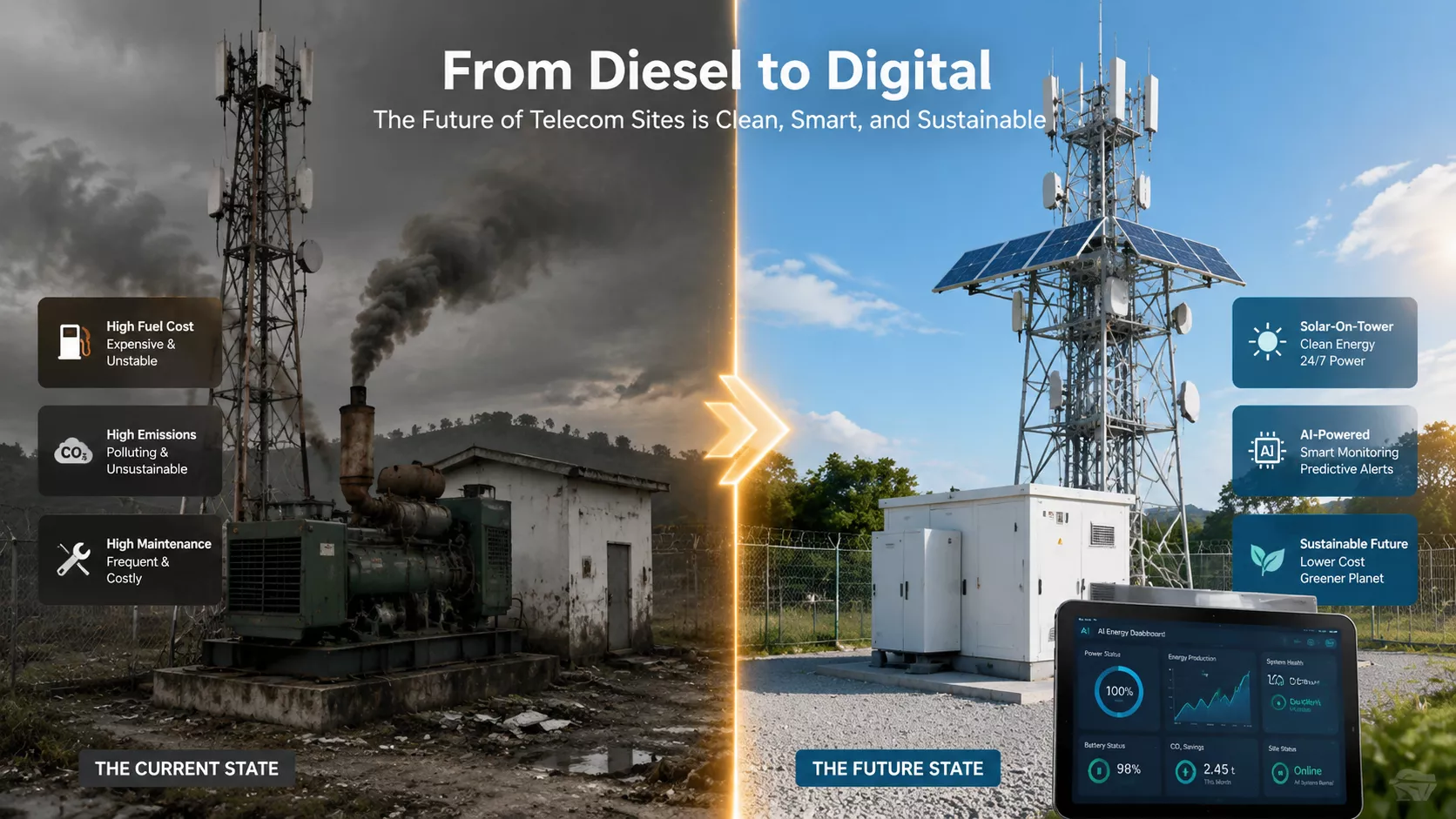
The traditional model relies heavily on the grid and diesel generators as backup. This approach is expensive, polluting, and increasingly fragile. A future-ready plan reimagines the telecom site not as a drain on energy, but as a self-sufficient, intelligent node. This involves integrating solar photovoltaic generation, advanced energy storage, and AI-driven management into a single, cohesive system.
Huawei's Green Energy Supply solution, for instance, provides a working model of this approach. By combining solar generation, storage, and intelligent scheduling, it has been deployed across more than 6,500 sites, generating approximately 12 million kWh of clean electricity annually. This has contributed to an estimated 5% reduction in carbon emissions and a 20-30% reduction in lifecycle energy costs [citation:4]. This shows that the technology for this shift is already mature and delivering results.
The conversation about solar for telecom has moved beyond simple cost savings. It is now about building resilience and gaining a competitive edge. Here are the key pillars of a futuristic solar-powered strategy.
Pillar 1: Deploy Advanced, High-Density Solar Technologies
One of the primary challenges for telecom sites, especially in urban areas, is space. Rooftops are small, and ground space is often unavailable or prohibitively expensive. This is where next-generation solar technologies come into play. Perovskite-silicon tandem solar cells, for example, represent a significant leap forward. These cells have achieved record efficiencies of 34.8% in 2025, compared to 27.3% for record silicon cells and about 20% for standard solar panels [citation:2][citation:5].
In a practical sense, this means a 30% jump in power output from the same footprint. For a telecom operator, this is transformative. A partnership between Swift Solar and American Tower Corporation is already exploring how these lightweight, high-density panels can be integrated into telecom towers, addressing the growing demand for solutions that can deliver more electricity per square foot [citation:2][citation:5]. A forward-looking plan would prioritize these technologies from the outset, especially for new deployments or major site upgrades.
Pillar 2: Embrace Creative Deployment Models
When even rooftops are insufficient, thinking outside the box becomes essential. The "Solar-on-Tower" concept, pioneered in a partnership between Ethio Telecom and Huawei, is a prime example. This approach integrates photovoltaic panels directly onto the telecom tower structure itself. It offers a practical solution to the challenges of limited land in urban areas like Addis Ababa, where thousands of sites face space restrictions that make traditional ground-mounted systems unworkable [citation:6][citation:9].
Initial results from the first installations in Ethiopia showed that diesel generator use was reduced from six hours to two hours per day, equating to a 40% cut in fuel consumption per site. This model demonstrates that solar is viable even in the most constrained environments and can deliver immediate, tangible operational savings [citation:6][citation:9].
Looking even further ahead, the concept of a self-powered telecom node could even take to the air. Companies like Sceye are building high-altitude platform stations (HAPS) – large, solar-powered aircraft that can park in the stratosphere to deliver internet connectivity. This represents the ultimate in "site-less" infrastructure, where the energy source is integrated into the platform itself [citation:1].
Pillar 3: Use AI to Achieve Radical Efficiency
Deploying solar and batteries is only half the solution. The other half is managing the energy flow with extreme intelligence. A futuristic plan doesn't just generate clean energy; it optimizes every last watt.
The use of AI is becoming central to this. Orange Middle East & Africa and Huawei, for example, are deploying "AI Solar" sites that combine solar power with AI-driven forecasting and energy management [citation:8].
The AI platform analyzes historical traffic data alongside weather forecasts to anticipate network demand and solar energy availability. When energy becomes constrained, the system can dynamically adjust site operations, temporarily shutting down non-essential equipment in stages to ensure core services remain operational. In Côte d'Ivoire, this approach has helped reduce outages by nearly 50% without requiring additional battery capacity [citation:8].
Similarly, SoftBank has launched a demonstration project in Japan for base stations combining solar, wind, and AI optimization. The AI continuously monitors generation, battery levels, and real-time communication traffic, automatically optimizing power consumption. For example, it can place certain equipment into low-power modes during periods of low network demand, maximizing efficiency without impacting service quality [citation:11]. This is the level of intelligence that will define the next generation of telecom infrastructure.
Pillar 4: Scale Through Portfolio-Level Strategies
A futuristic plan must also be a scalable one. On-site solar is essential, but it represents one piece of a larger energy portfolio. Operators can significantly amplify their impact and de-risk their energy supply through large-scale renewable energy procurement.
Verizon provides a powerful example. The U.S. operator has used virtual power purchase agreements (VPPAs) and green bonds to scale its renewable energy capacity to 2.6 GW. These agreements allow Verizon to fund the production of renewable energy by paying utilities to adopt solar and wind. The projects funded by its green bonds will prevent an estimated 4.8 million metric tons of CO2e annually [citation:3][citation:7].
This portfolio approach provides a strategic hedge against energy price volatility and a clear, verifiable path to meeting net-zero emissions targets. For a forward-looking telecom company, the strategy should be a mix of on-site generation for site resilience and off-site procurement for portfolio-wide decarbonization.
Pillar 5: Design for Resilience and Community Impact
Finally, a futuristic solar plan is not just about powering the network; it is about the network powering communities. In many parts of the world, mobile connectivity is a lifeline. When the grid fails, a solar-powered site remains operational, providing critical communication during disasters.
The benefits extend beyond basic uptime. As Orange's Ben Haidara noted, expanding connectivity in rural areas is only part of the objective. The longer-term goal is ensuring that digital services, including financial platforms, deliver tangible benefits to users once connectivity is in place. A reliable, clean-powered network becomes the backbone for economic inclusion, enabling services like mobile banking, e-commerce, and access to information that can transform lives [citation:8].
In Ethiopia, the move to solar has not only improved operational resilience but has also helped the national operator set a new technological milestone for the African telecommunications industry, showcasing leadership in the green transition [citation:6].
The future of telecom is not about faster speeds alone. It is about building a network that is smarter, cleaner, and more resilient. A forward-thinking strategy for a telecom service company using solar solutions is a multi-faceted plan. It involves adopting advanced, high-density solar technologies and creative deployment models like Solar-on-Tower. It requires embracing AI to achieve radical energy efficiency and scaling impact through a portfolio approach to renewable energy procurement. Finally, it focuses on building a resilient network that can serve as a cornerstone for community growth and digital inclusion. The technology and the business case are ready. The companies that act now will be the ones defining the future of connectivity.
About the author
This article was prepared by the strategy team at The Solar Telecom. We work with telecom operators and tower companies worldwide to design and deploy future-ready energy solutions. Our approach combines expertise in solar PV, battery storage, hybrid systems, and AI-driven management to help our partners build more resilient, cost-effective, and sustainable networks.
Disclaimer: This article explores strategic concepts and is based on publicly available industry developments and research findings current as of the date above. It is for informational purposes and should not be considered a definitive technical or financial plan. The development of a specific strategy requires detailed site analysis, feasibility studies, and professional consultation. Regulatory and market conditions may change; please verify current requirements with relevant authorities and stakeholders before proceeding with any project.
